Your training masked it. Your career revealed it.
ADHD and AuDHD coaching for medical professionals who are excellent at the work and overwhelmed by everything around it.
Doctors, nurses, midwives, physiotherapists, occupational therapists, medical registrars, medical students, and other allied health professionals.
Do any of these sound familiar?
- You have a backlog of clinical notes, reports, or letters that keeps you awake at night
- You thrived in training when someone else structured your days, and struggled when that scaffolding disappeared
- You excel in patient-facing or acute work but cannot face the documentation afterwards
- Your appraisal portfolio, CPD record, or revalidation feels like a constant threat
- Your colleagues see a competent professional. You see someone who is one missed referral or note away from a serious incident
- You’ve been told you’re burnt out. You suspect it might be something else
The scaffolding gap
Your training masked it. Your training years provided exams, rotations, supervisors, and structured days. When that scaffolding disappeared once you were qualified and working independently, the difficulties surfaced. ADHD is estimated to affect around 1 in 12 healthcare workers, and research suggests the figure may be considerably higher again among surgeons specifically, though it remains significantly underdiagnosed across the profession. Why ADHD surfaces later in doctors’ careers explores this in more depth.
This is not burnout (though burnout may be a consequence). It is not laziness (your clinical skills prove otherwise). Whether it is ADHD or AuDHD, it is a neurodevelopmental difference that responds to the right support.
Coaching is not a clinical service and does not create a medical record.
What becomes possible
Many medical professionals with ADHD or AuDHD have spent years compensating quietly, working harder than colleagues and hoping no one notices the effort. When you build around how your brain works, that changes, and not just on the surface.
It can look like:
- Notes captured during or straight after the appointment, rather than piling up
- Admin and referrals handled before they become a backlog
- Recovery planned in after a run of nights or on-call
- A clearer head, with less to hold all at once
- Understanding why the paperwork drains you when the clinical work does not
- Less energy spent keeping up appearances
None of this is about becoming a different clinician, or pushing harder in the settings that wear you down. That is the work we do together, confidentially, outside your appraisal and your regulator. It tends to show up first in the small things: the notes written up before the next patient, the inbox you stopped avoiding, the week that did not end in a crash.
If this is sounding familiar and you are seriously considering 1:1 coaching, the Discovery Session is the next step.
Book Your Free Discovery Session

The Medical Professional’s ADHD Impact Checklist
How are ADHD and AuDHD affecting your practice? 5 minutes, 15 questions. Completely confidential.
How coaching works
Step 1: Book a free Discovery Session
20 minutes online. We’ll discuss your most pressing professional challenge and whether coaching is the right approach. Completely confidential.
Step 2: We’ll map what’s actually happening
Together we identify the executive function patterns behind the difficulties, and determine where a system change would have the most impact on your practice.
Step 3: Build the scaffolding your career no longer provides
If we’re a good fit, we design a coaching programme around your clinical life. Practical systems for documentation, CPD management, and sustainable working patterns.
What a recent medical client said
“After just 4 weeks of coaching my quality of life improved immensely. Whether it was giving a gentle push, a new way of looking at a problem, or a tool/resource I had not discovered, Linda’s gentle input slowly built into lasting improvements in my life.”
Dr. D. M., NHS Doctor
Ready to talk?
It starts with a free Discovery Session
A 20-minute conversation on Zoom to see whether coaching is the right next step. Whether your trust or employer funds the coaching or you fund it privately, we will work out the right arrangement together. No pressure.
Frequently asked questions
Click any question to read the answer.
Is this confidential? What about my professional regulator?
Coaching is not a clinical service. It does not create a clinical record. I do not contact your professional regulator (the GMC, NMC, HCPC, or any other), your employer, or your occupational health department. For specific questions about disclosure obligations, your regulator’s own guidance on health conditions is worth reading. Most regulators’ guidance has become significantly more supportive in recent years.
I haven’t been diagnosed with ADHD or AuDHD. Can I still benefit?
Yes. Many medical professionals come to coaching before, during, or without a formal diagnosis. A diagnosis is not required.
I don’t have time for coaching. I barely have time for my existing commitments.
I work Monday to Thursday, 9am-5pm London time, with 45-minute sessions on Zoom. Many medical professional clients find that the time coaching saves (through better systems and reduced procrastination) more than offsets the session time within the first month.
How is this different from Practitioner Health or my trust’s wellbeing service?
Those services are valuable, especially for acute mental health support. What they typically don’t offer is ADHD and AuDHD-specific coaching: practical systems for documentation, CPD management, time structure, and the specific executive function challenges that affect your daily practice.
What happens in the Discovery Session?
20 minutes online. I’ll ask about your biggest professional challenge, we’ll explore what’s behind it, and we’ll assess whether coaching is the right approach. No obligation. Not a clinical assessment. Completely confidential.
Is there any research on ADHD in medical professionals?
There is a growing evidence base. A 2025 study in Occupational Medicine specifically examined doctors with ADHD accessing Practitioner Health in England, finding that ADHD assessment is relevant and important for medical professionals presenting with mental health difficulties. A 2026 article in the Bulletin of the Royal College of Surgeons looked specifically at ADHD in the surgical profession, citing research suggesting ADHD may affect up to around a third of surgeons, and highlighting real strengths, including rapid decision-making and performing well under pressure, alongside the genuine challenges. I can share the references if you’d like.
Is this therapy, or a clinical service?
No. Coaching is not therapy and does not create a clinical record. Sessions are completely confidential. See our Privacy Policy.
About Linda Fox
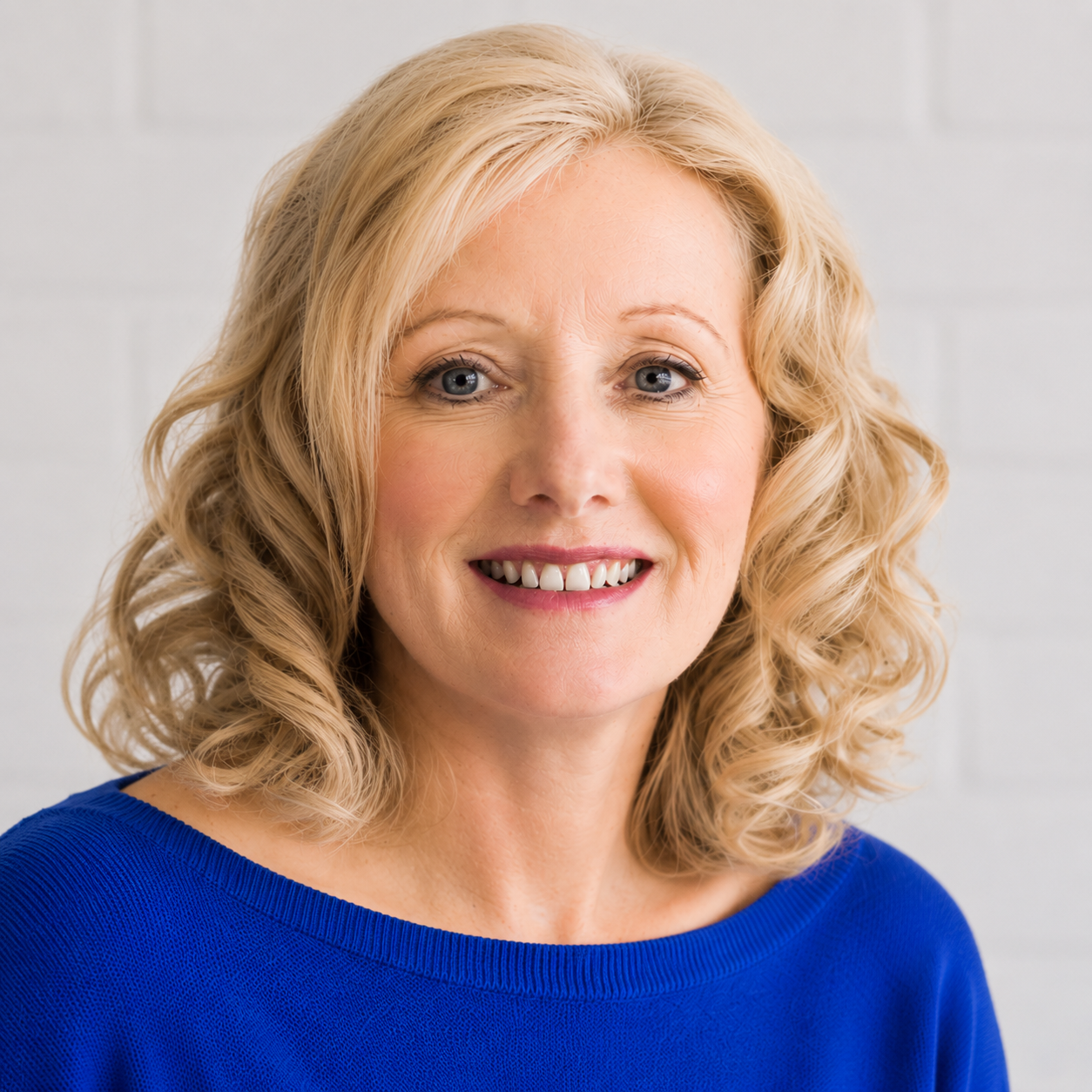
Linda is an ICF-ACC credentialled adult ADHD coach (ADHD Life & Business Coach, CALC), with lived experience of ADHD herself. She has been coaching adults with ADHD since 2000, one of the very first specialist ADHD coaches in the UK.
She works with entrepreneurs, legal and medical professionals, and others navigating demanding careers, helping them build practical strategies that fit how their brain actually works rather than fighting against it.
UK-based, supporting clients with ADHD and AuDHD worldwide on Zoom.