You chose to work for yourself for the freedom. Now you need the scaffolding to actually enjoy it.
I am Linda Fox, an ICF-ACC credentialled Adult ADHD Life & Business Coach, coaching since 2000, with lived experience of ADHD myself. I help entrepreneurs, founders, business owners and self-employed professionals run a business that works with an ADHD or AuDHD brain, not against it.
When you work for yourself, you are the strategist, the doer, the bookkeeper, the salesperson and the boss. There is no scaffolding unless you build it.
My clients include CEOs and founders with teams, company directors, consultants, contractors, freelancers, creative professionals and sole traders. If you want a quick read on where running your business is holding together, take the free ADHD Entrepreneur Chaos Audit. If you run your own thing with ADHD on board, you are in the right place.
Do any of these sound familiar?
- You start every project with fire and lose interest before it is finished
- Your revenue swings between feast and famine, with no pattern you can control
- Weeks of hyperfocus, then weeks where you can barely answer an email
- Invoicing, bookkeeping and tax pile up until they become a crisis, because the dopamine moved on long ago
- You have bought more planners, apps and systems than you can count, and reorganised them at 2am instead of doing the work that matters
- You are the one who decides everything, and the decision fatigue is real
- You are running more than one thing, and the newest one always gets the attention
- Working alone drains you in ways you did not expect
- You know exactly what needs doing. You just cannot make yourself start
Why working for yourself with ADHD is different
ADHD or AuDHD brains are often drawn to working for themselves, and for good reasons. Autonomy over your time. Variety in your days. Room to hyperfocus on work that genuinely lights you up, and feedback that is refreshingly concrete: clients pay or they do not, projects ship or they do not.
Many late-diagnosed adults realise, after a diagnosis, that going freelance or starting a business was a quiet attempt to find a working environment that suited their brain. It was a good instinct.
The catch is what you leave behind. In employment, the structure is built in. Working for yourself, there is no manager pulling deadlines back into focus, no team meeting forcing the day to start at 9am, and nobody chasing the invoice except you.
The admin does not go away because you ignore it. The costs quietly stack up: late fees, missed deadlines, lost paperwork, underbilled hours. And the masking does not stop when you leave employment either. It moves to your clients: professional, calm, on top of things, whatever it costs you.
It is not a discipline problem
Most business owners with ADHD have spent years being told to try harder, get organised and stick to a system. But standard productivity advice assumes things your brain does not reliably offer: consistent energy, steady follow-through, an appetite for routine.
Advice like “block 90 minutes of focused time every morning” assumes you can enter that focused state on demand. ADHD brains hyperfocus brilliantly, but rarely on demand.
The same wiring explains the admin pile. Your brain runs on dopamine, and bookkeeping offers almost none, so it cannot make itself care however much you want it to. That is not laziness or immaturity. It is wiring, and wiring can be built around.
If you are AuDHD
Working for yourself often appeals for another reason too: far more control over your environment than any office offers. That control matters.
It can also create a tension that is hard to put into words. The autistic need for structure pulls one way, and the ADHD need for novelty pulls the other. Coaching makes room for both: routines that hold, with variety planned in rather than fought against.
If you have sold up or stepped back
The exit is meant to be the happy ending, so almost nobody says this part out loud. When the business goes, the structure goes with it. The deadlines, the people waiting on you, the urgency that got you out of bed, all of it disappears at once.
For an ADHD or AuDHD brain that is harder than it sounds. Most of what kept you moving was outside you, and now there is unlimited time with nothing pulling on it. The days blur. The projects you finally have time for do not get started. And underneath there is often a quieter thing, which is that a good part of who you were came with the company.
There is an irony in it. The standard advice, and Michael Gerber’s argument in The E-Myth, is to build a business that runs without you. It is good advice. But do it well and you have succeeded at making yourself unnecessary, and the structure you spent years building was built for the business, never for you.
None of that means you were wrong to sell, and it is not ingratitude. It is what happens when the scaffolding comes down all at once. The work is building something to replace it that belongs to you rather than to the business.
If you are running more than one thing
Plenty of my clients have two or three businesses on the go, or a business alongside a job, or a portfolio of things that does not have a tidy name. That is a very ADHD shape, and it is not automatically a problem. Variety keeps an interesting brain interested, and more than one income stream is a sensible thing to have.
The difficulty is that attention does not divide evenly. The newest venture is the most stimulating, so it takes the energy, while the one that actually pays gets the leftovers. Then the guilt arrives, because you can see all of them slipping at once.
The work is rarely about cutting back to one. It is about deciding deliberately what each one gets from you and when, so the choice is yours rather than whichever thing shouted loudest this morning. I have written more about how to choose what to focus on when you have too many ideas and not enough income.
What becomes possible
When you stop fighting your brain and start building around it, things change, and not just on the surface.
Some of it is practical. Picture finishing the projects you start, and getting paid for them. A working week that has a shape you can rely on, even on the harder days. The admin handled before it becomes a crisis, rather than after.
Some of it is quieter, and just as important. A clearer head, with fewer tabs open at once. A real understanding of how your brain works, so you stop reading effort as failure.
It can look like:
- A calmer, clearer head, with less noise and overwhelm
- Understanding why your brain does what it does, and being kinder to yourself for it
- Habits and routines that hold, because they are built around you
- Knowing what you are working on today, without the morning panic
- Invoices that go out on time, and money that comes in on a rhythm you can plan around
- Charging what your work is worth, with less second-guessing
- Boundaries with clients that hold, and a calm no when you need one
- Finishing the day with something left in the tank
None of this is about becoming a different person, or forcing yourself into someone else’s system. It is about noticing how your brain actually works, and putting scaffolding in place that bends without breaking.
It tends to show up first in the small things: the task you used to avoid, started. The week that did not fall apart. The quiet realisation that you are not broken, you just needed a different way of working.
If this is sounding familiar and you are seriously considering 1:1 coaching, the Discovery Session is the next step.
If your business will be paying, everything you need, rates, card payment and invoicing, is on my coaching through your business page.
Book Your Free Discovery Session
How coaching works
The work follows the same shape as all my coaching: understand your unique brain first, then build your own toolkit around it. For your whole life, not just the business.
- Book a free Discovery Session. Twenty minutes on Zoom. I ask about your biggest challenge, we explore what is behind it, and we see if coaching is the right next step. No pressure. If we are not a good fit, I will tell you.
- Understand your unique brain. We start with an executive function evaluation, so we can see your actual strengths and where the friction really lives. Not guesswork. A clear picture of where the load actually sits.
- Build your own toolkit. Together we design systems and routines that fit your wiring, for the business and for the rest of your life. Not a rigid plan. Scaffolding that bends without breaking.
Sessions are 45 minutes, on Zoom, scheduled around your working week. Most clients book weekly or fortnightly. Everything we discuss is confidential.
What we often work on
- Procrastination, time and task management
- Working out what your work is worth, and charging accordingly
- Invoicing, chasing payment and the paperwork around money
- Switching between deep work, admin and sales without losing the day
- Marketing and visibility, when self-promotion feels uncomfortable
- Boundaries with clients, scope creep and saying no
- Delegating, and deciding what to hand over first
- Overwhelm and burnout, and acting before they take hold
Book Your Free Discovery Session →
See full pricing and funding options
A note on cost: many self-employed people and business owners put coaching through as a professional development expense for their business. Whether it works that way for you depends on your own circumstances, so do check with your accountant. Either way, I provide clear, itemised invoices.
What business owners & self-employed clients say
“Working with Linda has been genuinely life-transforming beyond what I would ever have expected. I have dealt with years of admin, started working with a remote PA, and now have a more structured approach to life. I no longer believe that I am just hopeless at everyday life.”
Mike, Business Owner & Creative Entrepreneur
“Having systems in place massively helps me live a life of freedom. Structure creates freedom… My biggest success has been launching my Breathwork and mindfulness business, Breathe with ADHD.”
Steve Whiteley, Entrepreneur, Breathe with ADHD
“Working with Linda has given me so many new strategies, and a new perspective on the areas I struggle with.”
Caroline, Company Director
Read more client stories.
Not ready to book a call yet?
Start with the free How Your Brain Works snapshot. A short set of questions, about five minutes, and your personal snapshot arrives by email.
It is a first look at how your executive functions are carrying the load, and a useful thing to bring with you if you book a Discovery Session later.
Take the free How Your Brain Works snapshot
Frequently asked questions
How is this different from ordinary business coaching?
Ordinary business coaching assumes a brain that already does follow-through, routine and admin on its own. ADHD coaching does not. We build around how your brain actually works, so the systems hold on the hard days, not just the good ones. I have specialised in ADHD since 2000, with lived experience of it myself.
I can barely manage my business. How can I add coaching on top?
Coaching does not add to your workload. It restructures it. Most clients find they reclaim time within the first few sessions because they stop spinning.
Do I need a formal ADHD diagnosis?
No. Many of my clients come to coaching before a diagnosis, during the wait for one, or self-identifying without one. Coaching works the same way for ADHD or AuDHD, diagnosed or not.
Can I claim coaching as a business expense?
Many self-employed clients account for coaching as professional development related to their trade. HMRC’s rules depend on your circumstances, so check with your accountant. I issue clear, itemised invoices that fit whatever accounting setup you use.
How often would we meet, and do I have to commit to a programme?
Most clients book weekly or fortnightly, and many vary the rhythm around the shape of their year. My Evolution programme is 6 sessions and my Momentum programme is 12. Some clients prefer ad hoc sessions around a specific challenge.
Do you work with my industry?
Probably. Working for yourself with ADHD has a lot in common across industries. The specifics of your trade matter less than the patterns of your day.
I am a founder or CEO with a team. Is this still for me?
Yes. Some of my clients are founders, CEOs and company directors leading teams. The challenges shift when you are the one in charge: delegation, decision fatigue, meetings that eat the day, and holding it together in front of people who look to you for steadiness.
The work underneath is the same. We start with how your brain actually works, then build scaffolding around the way you lead, not just the way you work.
Is coaching confidential, and is it the same as therapy?
Coaching is not therapy and does not create a clinical record. Sessions are completely confidential, I do not contact anyone about our work, and whether you tell anyone about coaching is entirely your choice. You can read more in my Privacy Policy.
Considering 1:1 coaching?
If you are seriously considering one-to-one coaching for yourself, a Discovery Session is the place to start. It is a short conversation to see whether we would be a good fit to work together. Twenty minutes on Zoom, free, with no commitment.
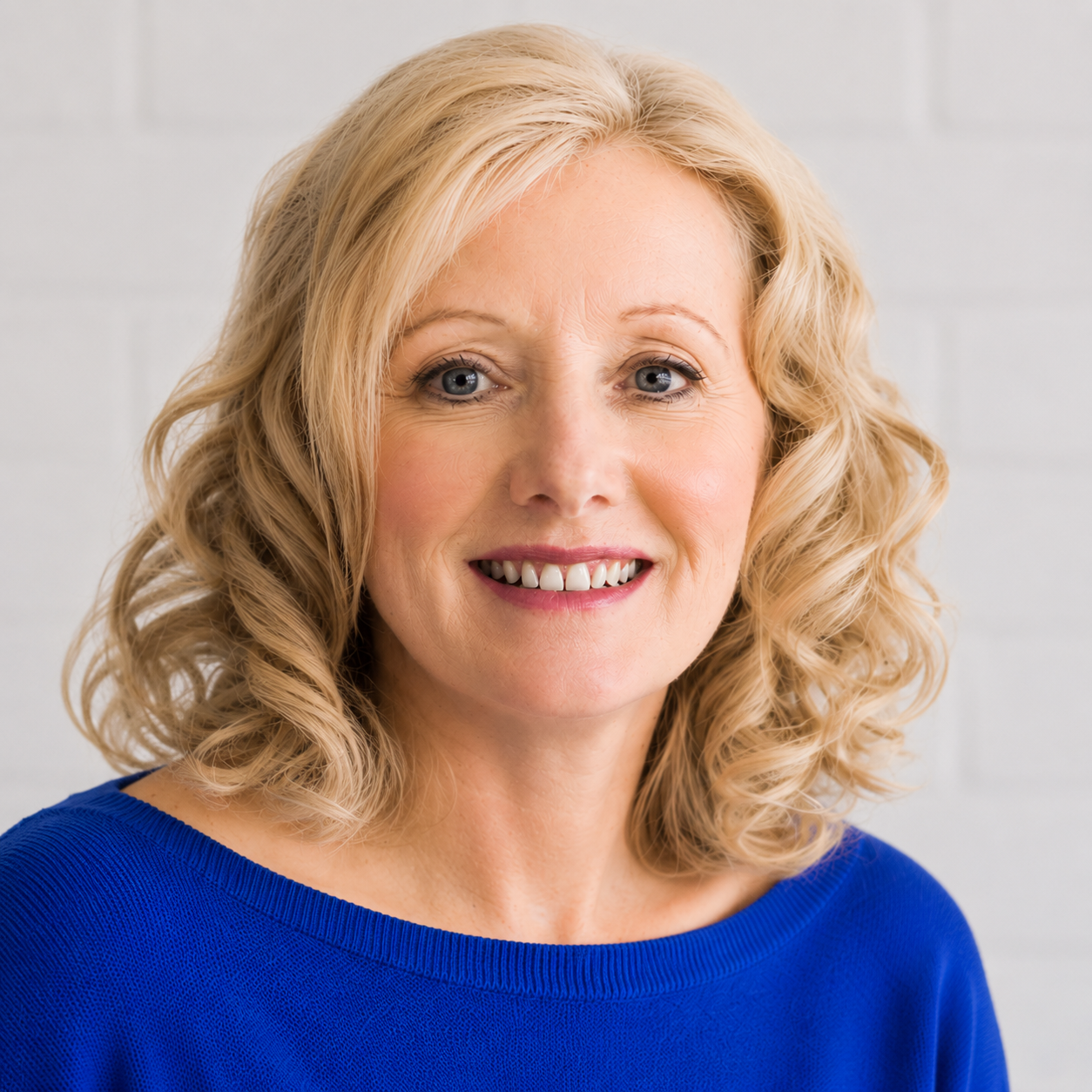
About Linda Fox
Linda is an ICF-ACC credentialled adult ADHD coach (ADHD Life & Business Coach, CALC), with lived experience of ADHD herself. She has been coaching adults with ADHD since 2000, one of the very first specialist ADHD coaches in the UK.
She works with entrepreneurs, legal and medical professionals, and others navigating demanding careers, helping them build practical strategies that fit how their brain actually works rather than fighting against it.
UK-based, supporting clients with ADHD and AuDHD worldwide on Zoom.