Your strategies held for years. Now menopause and the smallest criticism can both knock you sideways.
ADHD coaching for senior professional women navigating midlife, perimenopause, menopause, and the rejection sensitivity that has shaped your career and your relationships.
This page speaks to women’s lived experience of ADHD. If you’re trans, non-binary, or were assigned female at birth and recognise yourself here, you’re welcome too.
Do any of these sound familiar?
- You held a senior role for years through clever workarounds and sheer effort, and those workarounds are starting to fail you
- You started forgetting things about a year before the perimenopause symptoms appeared, and you put it down to stress
- One critical email can leave you replaying it for days, even when your colleagues told you it was fine
- You apologise excessively, then dissect every interaction afterwards for things you might have got wrong
- You were diagnosed late, or you are still wondering, and a child or grandchild’s diagnosis was the first clue. For some of you, it has become clear the picture is AuDHD rather than just ADHD
- Brain fog is a different beast since perimenopause, and the strategies that used to hold you up have stopped working
- Sleep, mood, focus and self-esteem have all shifted at the same time and the standard menopause GP advice does not seem to address the bigger picture
It is not “just menopause”
The same brain that ran your team for fifteen years now struggles to remember what you came into the room for. The same focus that built your career now slips when you most need it. The same mind that smoothed every difficult conversation at work is now caught in spirals over a colleague’s slightly cool tone.
That is not “just menopause”. And it is not weakness.
ADHD and AuDHD brains have been wired this way all along. For many high-achieving women, the masking strategies that carry you through your 20s, 30s and 40s are partly oestrogen-dependent. When perimenopause and menopause shift oestrogen levels, those strategies stop working as well as they used to, and the underlying ADHD or AuDHD becomes harder to hide.
For many late-diagnosed women, the picture is more layered than just ADHD. AuDHD, the combination of autism and ADHD, is increasingly recognised in women who have spent decades being told they were “too sensitive”, “too detail-focused”, or “too much”. The masking strategies are even more demanding, and the perimenopause crash even sharper.
Add rejection sensitivity to the mix, the intense emotional reaction to perceived rejection or criticism that ADHD and AuDHD brains often carry, and senior women at this stage can find themselves in a perfect storm: failing strategies, hormonal shifts, and the cumulative weight of decades of micro-injuries from criticisms a sensitive brain was already over-attuned to.
This is not a personal failing. It is a recognised pattern. And with the right scaffolding, it can be navigated rather than endured.
What becomes possible
Many women reach midlife having coped brilliantly for decades, then find the old strategies stop working just as menopause and the years catch up. When you build around how your ADHD or AuDHD brain works now, that changes, and not just on the surface.
It can look like:
- The mental load lifting, so your head feels clearer and less crowded
- Systems that fit the brain you have now, not the one that ran on willpower
- Criticism landing less like a body blow, and you recovering from it faster
- Understanding that this is a real shift, not you failing or losing your edge
- Energy going to what matters, instead of holding everything together
- Being kinder to yourself after decades of pushing through
None of this is about going back to who you were at thirty, or pushing harder. That is the work we do together. It tends to show up first in the small things: the morning that started without dread, the comment you did not replay for hours, the week that did not flatten you.
Where is ADHD affecting your life now?
If you are not sure where to start, my free Executive Function Snapshot walks through the five areas and fourteen skills that get things started, keep them going and help you adapt. It tells you in plain words where you are naturally strong and where things take more effort at the moment.
About five minutes, and you do not have to give your name to see your result. It is worth having in front of you before any conversation about coaching, because it turns a vague sense that everything is harder than it used to be into something specific.
If you are considering 1:1 coaching, the Discovery Session is the next step. 20 minutes on Zoom to discuss what is most pressing for you and whether we are a good fit.
Book Your Free Discovery Session →
Where coaching changes things at this stage of life
Coaching does not add to your workload. It restructures it.
The work is targeted to the specific gaps ADHD, perimenopause, and rejection sensitivity create together:
- Menopause-aware ADHD scaffolding. Practical systems built for the brain you have right now, not the one you had at 35
- Rejection sensitivity reduction. Frameworks for catching the spiral early, separating the actual feedback from the meaning your brain is adding, and shortening the time you spend in distress
- Energy and capacity management. Pacing the day around how perimenopause and ADHD interact, rather than fighting both at the same time
- The “should be more capable than this” decade. Unpicking the perfectionism, over-apologising, and shame patterns that often shape senior women’s professional lives, especially with late-diagnosed ADHD
- Reasonable adjustments at senior level. Whether and how to ask, what tends to work in real workplaces, and how to frame it without sacrificing your professional standing
- Late diagnosis and identity. Reconciling who you have always been with what you now know, without having to rewrite your whole history alone
- Difficult conversations with GPs and HRT prescribers. Coming to those conversations prepared, with clear language for what you are experiencing and what you need
None of this is failure. It is wiring, hormones, and the cumulative weight of decades of holding it together. With the right scaffolding, it changes.
If burnout is part of where you are right now, the new piece on ADHD Burnout: Signs, Causes and Recovery may also be useful.
Investment
All coaching starts with a free Discovery Session
The Discovery Session is the conversation to have if you’re considering 1:1 coaching. We’ll explore which programme fits your situation, and whether working together feels right.
Book Your Free Discovery Session
20 minutes on Zoom. No pressure.
See full pricing and funding options.
Frequently asked questions
How does coaching work?
Three steps.
- Book a free Discovery Session. 20 minutes on Zoom. We discuss what is most pressing for you and whether coaching is the right next step. No pressure. If we are not a good fit, I will tell you.
- We map your next steps. Together we identify what is actually getting in the way, and what one structural change would make the biggest difference.
- Build systems that work with your brain. If we are a good fit, we design a coaching programme around your life as it is now. Practical scaffolding for energy, recovery, focus, rejection sensitivity, and the conversations you may need to have at work or with your GP.
I think I have ADHD but I have not been formally diagnosed. Can I still work with you?
Yes. Many of my clients come to coaching before, during, or without a formal diagnosis. A diagnosis is not required.
I think I might be AuDHD rather than just ADHD. Does that change anything?
Yes and no. Yes in that the AuDHD picture often involves additional layers, including sensory needs, recovery time, and social processing, that shape what coaching looks like in practice. No in that the core scaffolding work, the rejection sensitivity work, and the menopause-aware approach all still apply. We can talk through what fits your specific profile in the Discovery Session.
Is this confidential, and is it the same as therapy?
Coaching is private and completely confidential. It is not therapy and does not create a clinical record. I do not contact your employer, your line manager, your HR team, or your family. Whether you choose to disclose ADHD, perimenopause, or anything else to colleagues or family is entirely your decision, and we can talk it through if it is on your mind. You can read more in my Privacy Policy.
I was diagnosed late. Is it too late to work on this now?
Not at all. Many of my clients begin coaching after a midlife or late-life diagnosis. The work is often deeper because there is so much history to make sense of, and the impact on day-to-day life can be quicker and more meaningful than people expect.
Will coaching help with rejection sensitivity specifically?
Yes. Rejection sensitivity is one of the most under-recognised parts of ADHD and one of the most life-shaping for senior women. Coaching helps you develop frameworks to catch the spiral early, separate the actual feedback from the meaning your brain is adding, and reduce the time you spend in distress. It does not make rejection sensitivity disappear, but it makes it more manageable.
I am semi-retired, or no longer in paid work. Does coaching still apply?
Yes. ADHD does not retire. The friction continues into board work, voluntary roles, family life, and the rhythm of post-employment days. Many of my clients are senior women navigating exactly this transition, with the added weight of menopause and late diagnosis arriving at the same time.
- Perimenopause or ADHD? Telling them apart when symptoms overlap
- HRT and ADHD: what we know, and what we don’t
- Burnout or Undiagnosed ADHD? Why So Many Women Hit a Wall in Their 40s and 50s
- ADHD burnout in midlife and menopause: when capacity changes
- Signed off work with stress: when ADHD is part of the picture
- High-functioning ADHD burnout: when nobody can see it from outside
- Re-Designing Work in Your 50s: ADHD-Friendly Career Pivots for Senior Women
Get the free guide
Join my list and your first email brings my free guide, 5 ADHD-Friendly Organisation Hacks (and how to make them stick), a practical 17-page PDF workbook you can print and keep. After that, weekly ADHD and AuDHD strategies for grown-up brains. No spam, unsubscribe anytime.
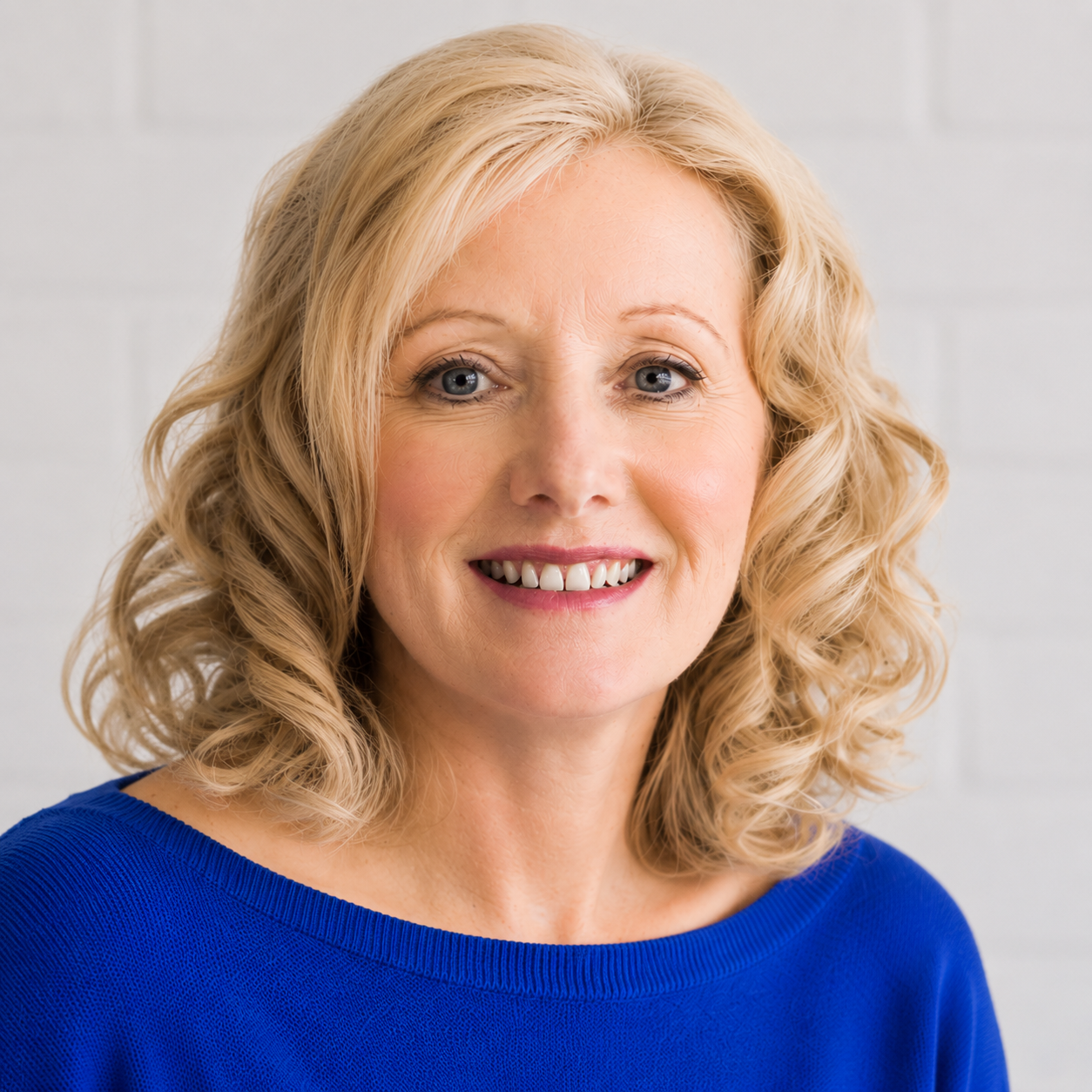
About Linda Fox
Linda is an ICF-ACC credentialled adult ADHD coach (ADHD Life & Business Coach, CALC), with lived experience of ADHD herself. She has been coaching adults with ADHD since 2000, one of the very first specialist ADHD coaches in the UK.
She works with entrepreneurs, legal and medical professionals, and others navigating demanding careers, helping them build practical strategies that fit how their brain actually works rather than fighting against it.
UK-based, supporting clients with ADHD and AuDHD worldwide on Zoom.