Prefer to listen? Your phone or computer can read this page aloud. Here's how
The assessment was over. The specialist said yes, you do have ADHD. Whether you closed a laptop or stepped out of a consulting room, you did not quite know what you felt.
Maybe it landed as relief. Years of “what is wrong with me?” suddenly given a different shape, with a cause that was never your fault.
Perhaps it landed as grief. All those years of trying harder than people knew, all those misunderstandings with parents and teachers and bosses, all the energy spent compensating for something that nobody named.
Most likely, it was both. And both responses are entirely valid.
Why so many women are diagnosed at this stage of life
If you have been diagnosed in your 40s, 50s, or 60s, you are part of a much larger pattern. Late diagnosis is the rule for women, not the exception.
There are several reasons for this.
Girls with ADHD are often better at masking than boys. They learn to perform organised, agreeable, capable, sometimes from primary school onwards. The internal cost is invisible. The visible result looks fine, so the difficulty does not get noticed.
The diagnostic criteria for ADHD were largely developed by studying boys with hyperactive presentations. Quietly inattentive girls, daydreamers, or girls with ADHD who managed to compensate at school, slipped through the net.
And then there is the hormonal piece. Throughout your reproductive years, oestrogen helps modulate dopamine, which is the neurotransmitter most associated with ADHD. As oestrogen declines in perimenopause, that quiet biological support reduces. The strategies that used to work stop working as well. The masking takes more energy than is available. The picture that was hidden starts to surface.
For many women, the first time anyone takes ADHD seriously is the first time they cannot keep all of the plates spinning. By then they are often exhausted.
Many of these women have been functioning at a high level despite the cost. The post on high-functioning ADHD burnout is worth reading if that pattern sounds familiar.
If you want more on the hormonal piece, the post on ADHD burnout in midlife and menopause goes into it in more detail.
If you are specifically in your 50s, Why Successful Women Hit a Wall in Their 50s explores how decades of masking catch up at this particular stage of life.
The relief
For many women, relief is the first response.
It is the reframe of decades. You were not lazy. You were not disorganised because of poor character. You were not difficult, scattered, or careless. You were, all along, navigating a brain that was wired differently, without the language or the support to know it.
That reframe is significant. It often quietens an internal voice that has been very harsh for a very long time.
Some of what tends to shift quickly:
- The sense that you have been failing at something everyone else finds easy
- The certainty that you are uniquely flawed
- The shame attached to specific patterns (interrupting, time blindness, losing things, missing deadlines)
- The belief that you should be able to do this if you just tried harder
None of these dissolve overnight, but they soften. Many women describe the diagnosis as the first time they could see themselves accurately.
The grief
The grief tends to come behind the relief, sometimes weeks later. Sometimes much later.
It can take many forms.
Grief for the version of you that might have existed if this had been seen earlier. The career path you might have taken. The relationship that might not have ended the way it did. The decade you spent thinking you were the problem.
Grief for the energy you spent compensating, when you could have been spending it living.
Grief for the parents, teachers, partners, and employers who did not see what was happening, even when you tried to explain it. Some of those relationships you may grieve in particular, especially if the people who should have understood you instead added to the difficulty.
Grief for the girl you used to be, who was trying so hard, and who no one quite saw.
This is real grief. It deserves the time it takes.
Both can be true at once
The two responses can sit alongside each other in a way that feels confusing at first.
You can be enormously relieved and deeply sad. You can feel suddenly seen and also angry that it took this long. You can be glad to have the diagnosis and unsure what to do with it.
None of this is contradictory. It is the natural shape of receiving information that explains a lot of your life, much of which has been hard.
You do not need to resolve the contradiction. You need to give it room.
What the diagnosis does and does not change
This is worth being clear about.
What it does not change:
- The brain you have lived with all your life is the same brain you had this morning
- The strengths you have developed, often as a direct result of compensating, are real
- The relationships and work and life you have built are still yours
What it can change:
- How you talk to yourself about your difficulties
- How you ask for support, at home and at work
- What kind of medical help is now available to you
- What pace and structure your life can have
- How honestly you can describe what is going on for you
The diagnosis is information. It is not a verdict. It does not mean you are now broken. You were navigating something all along; now you have a name for it.
Practical first steps
After the diagnosis, there is sometimes a sense of “now what?” The clinic has handed you a label. You go home. Life carries on. And you are not sure what to do with the new information.
These are the things worth doing in the first few months.
Read about ADHD in women specifically. Much of the older literature is based on boys and men. The presentation in women, particularly midlife women, is often quite different. Look for material that takes that into account. The NHS pages on ADHD in adults are a sensible reference, and the NICE guidance on ADHD (NG87) is the framework GPs work within.
Decide what you want to do about medication, in your own time. Medication is one option among several. It works very well for many people, and is not the right fit for others. Have the conversation with your prescriber. Take the time you need to make a considered choice rather than a rushed one.
Tell the people who matter. You do not have to tell everyone. You may want to tell partners, close family, possibly your manager. The framing is yours to choose. “I have recently been diagnosed with ADHD, which explains a lot of what you have seen me struggle with” is enough.
Look at your work and life through a different lens. What about your current setup is genuinely hard for an ADHD brain? What workarounds have you been using that are now costing too much? What might be simpler if you adjusted it rather than pushed through it?
Consider some kind of structured support. This might be coaching, therapy, peer groups, or a combination. Particularly in the first year, having a space to think this through with someone who understands ADHD can make a meaningful difference.
Try a free assessment as a starting point. The ADHD Overwhelm and Burnout Check-Up can show whether years of compensating have left you running on empty.
If burnout is part of your picture, the post on why ADHD burnout keeps happening and returning to work after ADHD burnout are both worth reading.
A note on AuDHD
If you have been diagnosed with ADHD and you also recognise autistic traits in yourself, you are not alone. ADHD and autism frequently coexist, and women with both, AuDHD, are often diagnosed even later than women with ADHD alone.
If this resonates, the post on AuDHD when ADHD and autism show up together might be useful.
The grief and relief response can be even stronger with an AuDHD recognition, because the masking has often been more comprehensive. Be kind to yourself. There is no rush to pursue further diagnosis if you do not want to. Your felt sense of yourself is information, even before any formal assessment.
The longer-term reframe
In the first year after diagnosis, many women describe a kind of emotional reorganisation. Old memories are revisited with new understanding. Patterns in relationships start to make different sense. The version of yourself who has been running the show for decades meets a new piece of information about why she has been running it the way she has.
This takes time. It is not a tidy process.
What tends to emerge, eventually, is a different relationship with yourself. Less frustrated. More accurate. More able to ask for what you need without apologising for needing it.
You do not suddenly become a different person. You become a more accurately understood version of the same person.
If you want some support thinking it through
A late ADHD diagnosis often arrives at a stage of life when you have considerable demands on you. Career, family, ageing parents, your own changing health. The diagnosis lands in that mix, and there is often very little time or space to do anything with it.
Coaching can be that space. Not therapy, not medical care, but a structured conversation about what this means for you, your work, your relationships, and how you want to live the next stage of your life.
If you are a senior professional woman, my page on ADHD coaching for senior women in midlife covers what coaching looks like at this stage.
If you are seriously considering one-to-one coaching for yourself, a Discovery Session is the place to start. It is a short conversation to see whether we would be a good fit to work together. Twenty minutes on Zoom, free.
Book Your Free Discovery Session →
Get the free guide, and join my weekly newsletter
Sign up and I will send you my free guide, 5 ADHD-Friendly Organisation Hacks (and how to make them stick), straight away. You will also join my weekly newsletter with practical strategies for adults with ADHD and AuDHD. Unsubscribe any time.
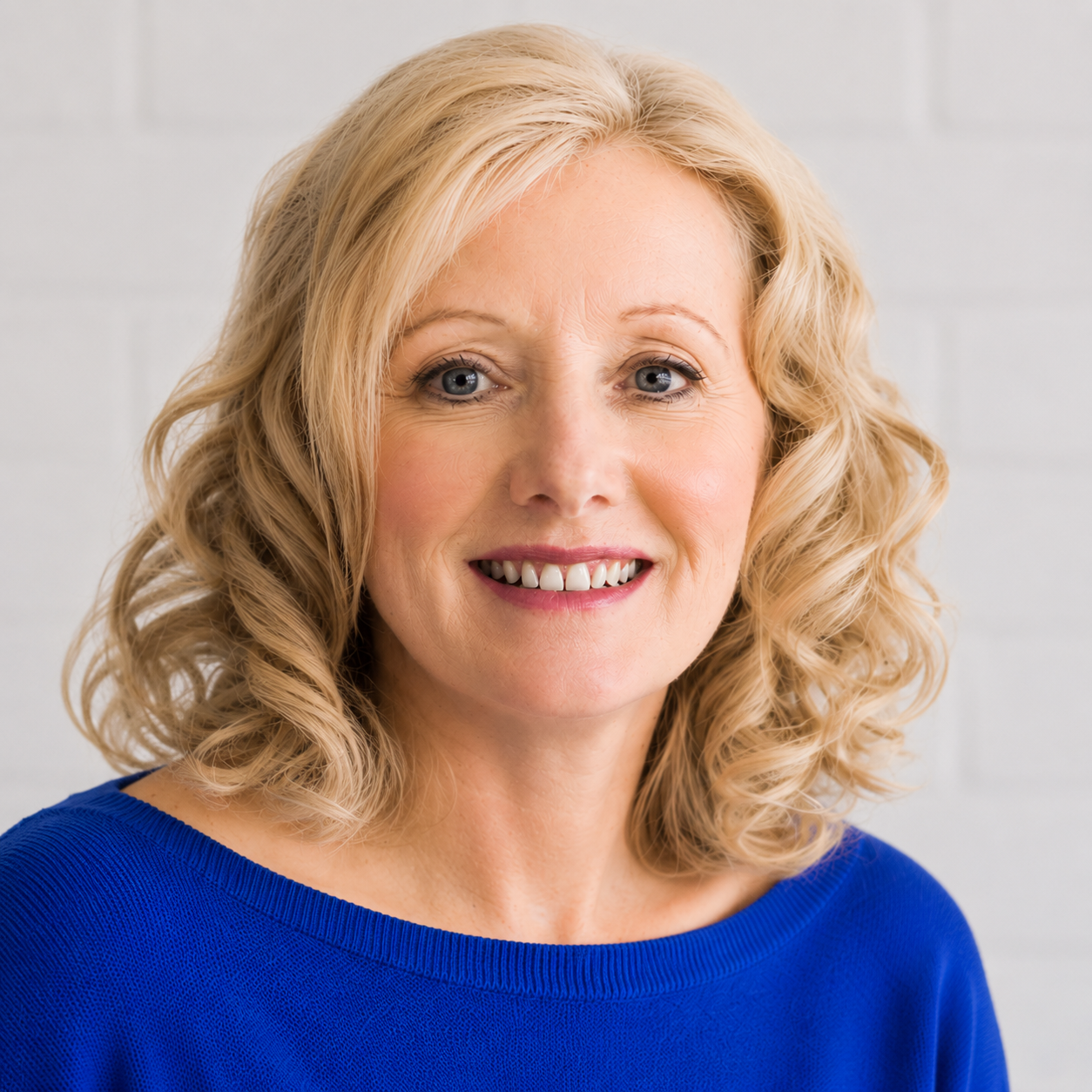
About Linda Fox
Linda is an ICF-ACC credentialled adult ADHD coach (ADHD Life & Business Coach, CALC), with lived experience of ADHD herself. She has been coaching adults with ADHD since 2000, one of the very first specialist ADHD coaches in the UK.
She works with entrepreneurs, legal and medical professionals, and others navigating demanding careers, helping them build practical strategies that fit how their brain actually works rather than fighting against it.
UK-based, supporting clients with ADHD and AuDHD worldwide on Zoom.