Prefer to listen? Your phone or computer can read this page aloud. Here's how
You used to manage your diary without much trouble. You could hold multiple projects in your head, keep clients happy, run a household, stay reasonably on top of things. Maybe with some chaos at the edges, but broadly, you managed.
Now you are not managing in the same way. And you cannot work out why.
If you are a woman in your 40s or 50s navigating perimenopause or menopause alongside ADHD, what you are experiencing has a biological explanation. This is not a character flaw surfacing. This is your brain chemistry being disrupted at a fundamental level, at the same time as your hormones are shifting in ways that directly affect that same brain chemistry.
It is a lot. And it deserves a proper explanation, not a productivity tip.
The oestrogen-dopamine connection
ADHD is, at its core, a challenge with dopamine regulation. Dopamine is the neurotransmitter most closely associated with motivation, focus, and the ability to start and sustain tasks. For ADHD brains, dopamine does not behave in quite the same way as it does in neurotypical brains.
Here is what many women are not told: oestrogen plays a significant role in how dopamine is regulated.
Throughout your reproductive years, oestrogen helps to modulate dopamine activity. It is not a cure, and it never eliminated your ADHD. But it provided a degree of biological buffering. Your brain was working harder than you knew, and oestrogen was quietly helping to smooth the edges.
When oestrogen begins to decline, as it does during perimenopause and menopause, that buffering reduces. Dopamine regulation becomes more challenging. Focus, motivation, impulse control, emotional regulation, and working memory can all become noticeably harder to maintain.
For women with ADHD, this is not a slight change. It can feel like the floor has given way.
When the symptoms blur together
Perimenopause and ADHD share a great deal of symptom territory. This overlap can make it very hard to know what is going on, or to get appropriate support.
Both can produce:
- Brain fog and difficulty concentrating
- Disrupted sleep and fatigue
- Mood shifts and increased emotional sensitivity
- Forgetfulness and word-finding difficulties
- Reduced tolerance for demands on your time and energy
- A sense of overwhelm that does not match the difficulty of the task
When these symptoms appear or worsen in midlife, ADHD is often not the first thing a GP considers. The perimenopause explanation can seem more obvious. Women are frequently told this is hormonal, given advice to rest, or told that things will settle.
But if you have undiagnosed ADHD, rest alone will not resolve the underlying dopamine dysregulation. And if you have diagnosed ADHD, your existing strategies and medication may need to be reviewed because your neurochemistry has shifted.
Why so many women receive an ADHD diagnosis at this life stage
This is one of the most important things I want you to understand: receiving an ADHD diagnosis in your 40s or 50s is not unusual. It is, in fact, remarkably common for women.
There are several reasons for this.
Girls with ADHD are often better at masking than boys. They learn, sometimes very early, to work around their difficulties, to over-prepare, to be hyper-organised in visible ways while quietly exhausted behind the scenes. They pass through school and early career without the difficulties being noticed because the strategies work well enough to compensate.
Then menopause removes the hormonal support that was also quietly helping. The masking strategies become harder to maintain. The compensation takes more energy than is available. What was previously hidden starts to surface in ways that are difficult to ignore.
The late diagnosis often brings a mixture of relief (“so there is a reason for all of this”) and grief (“I wish I had known sooner”). Both of those responses are entirely reasonable. You can hold both at once.
If you also have an autism diagnosis, or suspect you might, the picture is often more complex again. Autism and ADHD frequently coexist, and for autistic women, masking can be even more energy-intensive. There is more on that on the AuDHD page.
The trap of comparing yourself to a previous self
This is where many of the women I work with get stuck.
They are holding an internal comparison between who they are now and who they were at 35, or 40, or earlier in their career. And they are interpreting the gap as failure.
“I used to be able to do this.”
“I used to manage a whole team. Now I can barely get through my to-do list.”
“I have always been a high achiever. Why can’t I do basic things any more?”
The comparison is understandable, but it is measuring you against a version of yourself who was operating under different hormonal conditions, with different brain chemistry, at a different life stage. It is not a fair measure.
This is not you declining. This is your capacity genuinely changing. And there is a significant difference between those two things.
If you want to understand more about the nature of capacity and how ADHD affects the energy available for different kinds of work, the spoon theory framework can be a useful way of making sense of it.
Recalibrating, not giving up
The goal here is not to find ways to achieve the same output you managed before. The goal is to understand your current capacity accurately, and to work with it rather than against it.
This is a different kind of problem to solve. It requires honest assessment rather than willpower.
Some of what helps at this stage:
Sleep as a non-negotiable. Sleep disruption is extremely common during perimenopause, and for ADHD brains it is particularly costly. Even modest improvements to sleep quality can have a disproportionate effect on cognitive function. This is often the first thing worth addressing.
Energy mapping across the day and week. You may find your peak cognitive window has shifted. What used to work in the mornings may work better at a different time now. Tracking your energy for a week or two, without judgement, can reveal patterns that are genuinely useful. There is more on this in the post on pacing your working week with ADHD.
Boundaries that match your reduced capacity. The post on saying no when your nervous system has already said yes covers practical scripts for this. Reducing masking where you can. Masking costs energy. It is a form of constant, invisible effort. In professional or social contexts where you feel safe enough to unmask, the energy saved can be significant. This is worth considering seriously, especially as you have less buffer than you used to.
Body-based regulation. Movement, time outdoors, and sensory regulation can all support dopamine function in ways that are genuinely helpful for ADHD brains. These are not substitutes for other support, but they are tools worth having.
Reviewing your structure and commitments. What worked in your 30s may be over-engineered for your current capacity, or in the wrong places. Some strategies need updating, not repeating harder.
If you would like a clearer picture of where your capacity actually is right now, my free Am I Burnt Out? self-test can help you take stock.
When to involve your GP or a specialist
This is informational guidance, not medical advice. But there are some important conversations worth having if you have not already.
If you are experiencing significant perimenopause symptoms, a conversation with your GP about HRT (hormone replacement therapy) is worth having. Some women find that HRT has a meaningful effect on their cognitive symptoms, including brain fog and concentration, though the degree of benefit varies. Your GP can help you understand the options relevant to your situation.
If you are on ADHD medication, it is worth having a review with your prescribing specialist or psychiatrist. Hormonal changes can affect how medication works, and adjustments are sometimes appropriate.
If you do not yet have an ADHD diagnosis but recognise yourself in what you have read here, your GP is the starting point for a referral. Be specific about your cognitive symptoms, not because you need to justify yourself, but because specificity helps the referral get taken seriously.
For more on perimenopause and menopause clinically, the British Menopause Society is a UK authoritative source.
You may benefit from a specialist who understands both ADHD and menopause, or from working with an ADHD coach alongside any medical support you receive. Coaching does not replace clinical care, but it can help you make sense of your situation and work out what adjustments are practical and realistic for your life right now.
This is not a personal failing
I want to say this clearly, because it is the part that tends to get lost.
The women who come to me at this life stage have often been coping, adapting, and compensating for decades. They are capable, intelligent, experienced people who have found ways to manage a neurological difference that was never fully explained or supported. And now they are in a phase of life where the hormonal support they did not even know they had is reducing.
Of course it is harder. How could it not be?
The difficulty you are experiencing is not evidence that you have failed or that something is wrong with you as a person. It is evidence that your body and brain are going through a significant biological transition, and that the old approaches need updating.
Burnout at this stage often comes from the gap between what your capacity used to be and what you are still trying to deliver. The path through is not to push harder. It is to understand your current capacity and build your life and work around it, rather than fighting it.
There is much more on the nature of ADHD burnout and what it actually involves in the main ADHD burnout guide, if you want to explore further.
If your midlife burnout is the kind that nobody else can see because you are still functioning at work, my post on high-functioning ADHD burnout may resonate too.
A next step, if you want one
Back From Burnout: the recovery programme
My self-paced recovery programme for adults with ADHD or AuDHD: nine short modules, twenty-two practical tools and one personal recovery plan, built for a brain with very little energy left. £97, or £447 with three coaching sessions with me.
If you are trying to work out what your changed capacity actually needs right now, that is something coaching can genuinely help with. Not by giving you a generic framework, but by working through your specific situation, your work, your commitments, and what adjustments are realistic.
A 20-minute Zoom conversation, free, with no commitment. It is a chance to talk through where you are and whether working together would be useful.
Book Your Free Discovery Session →
If you would like more on what coaching looks like at this stage of life, see my ADHD coaching page for senior women in midlife and menopause.
Get the free guide, and join my weekly newsletter
Sign up and I will send you my free guide, 5 ADHD-Friendly Organisation Hacks (and how to make them stick), straight away. You will also join my weekly newsletter with practical strategies for adults with ADHD and AuDHD. Unsubscribe any time.
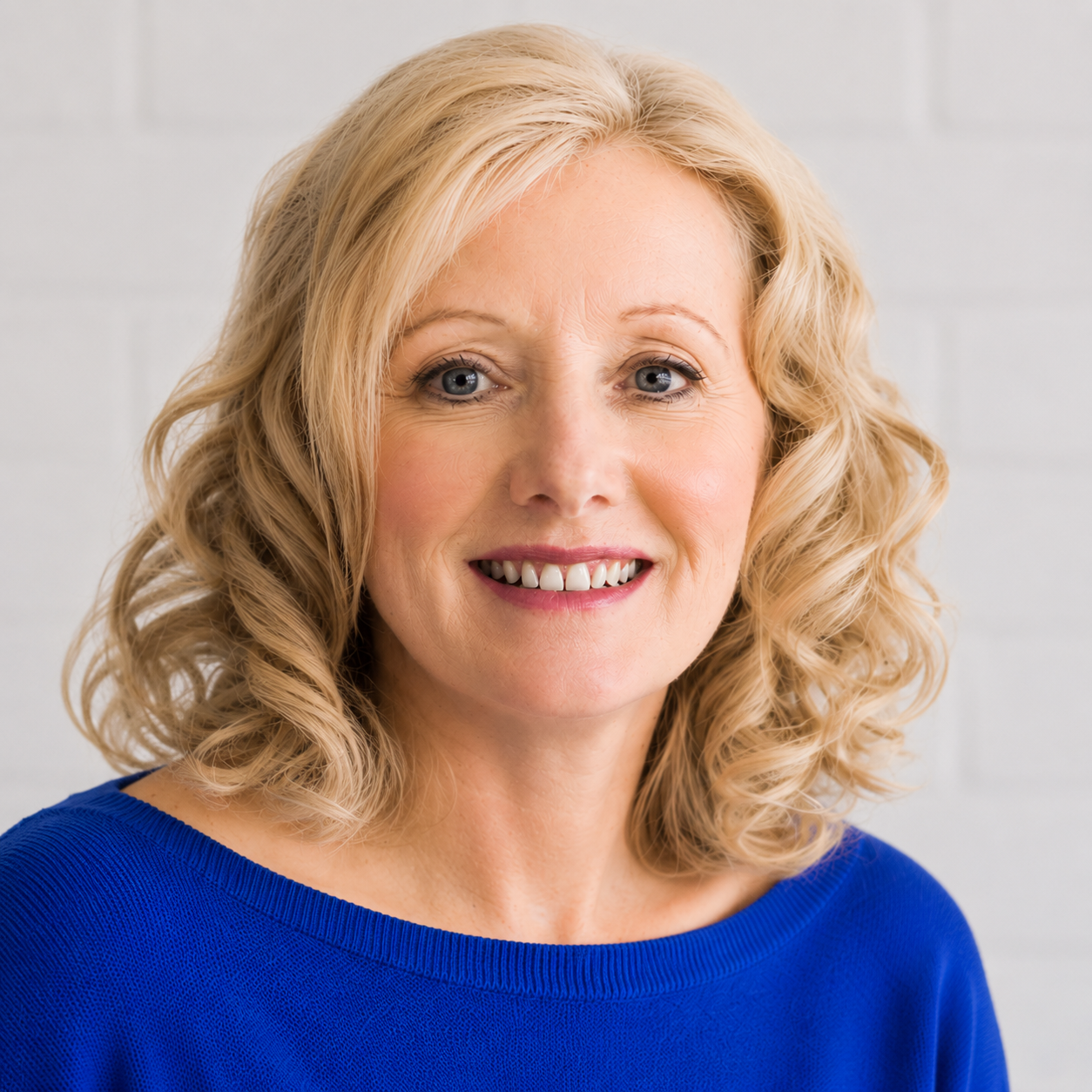
About Linda Fox
Linda is an ICF-ACC credentialled adult ADHD coach (ADHD Life & Business Coach, CALC), with lived experience of ADHD herself. She has been coaching adults with ADHD since 2000, one of the very first specialist ADHD coaches in the UK.
She works with entrepreneurs, legal and medical professionals, and others navigating demanding careers, helping them build practical strategies that fit how their brain actually works rather than fighting against it.
UK-based, supporting clients with ADHD and AuDHD worldwide on Zoom.