Prefer to listen? Your phone or computer can read this page aloud. Here's how
You need routine to feel safe, but you also get bored of routine within a week. You crave social connection, but after an hour of it you are completely drained. You want to plan, but the plan keeps changing because your brain keeps changing its mind.
If this sounds like you, you might have AuDHD, the combination of ADHD and autism. And it can feel like living with two brains that want completely different things.
This post is a primer on what AuDHD is, why it is so often missed, and what it can mean to recognise it for the first time.
What makes AuDHD different
ADHD craves novelty. Autism craves predictability. When both are present, they pull in opposite directions. This creates an internal tension that most people around you cannot see.
Some common patterns:
- You build a system that works beautifully for two weeks, then abandon it because the ADHD part of your brain is done with it
- You hyperfocus on a project for hours, then crash hard because you forgot to eat, drink, or take a break
- You mask in social situations (the autism side) while also being impulsive in conversations (the ADHD side), leaving you confused about who you actually are in a room full of people
- Sensory overload and emotional dysregulation overlap in ways that are hard to untangle
- You set up structures because the autism side needs them, then resent the structures because the ADHD side wants freedom
- You can be both rigid and impulsive, both organised and chaotic, in the same hour
These are not contradictions. They are the natural shape of two different neurological patterns operating at once.
Why AuDHD often goes undiagnosed for years
Until very recently, ADHD and autism were treated as separate, often mutually exclusive, conditions. Many adults with AuDHD have spent decades being assessed for one and missing the other.
A few reasons this happens:
Diagnostic conventions lagged behind reality. The diagnostic manuals only began to formally allow co-occurring ADHD and autism in 2013. Many clinicians still treat them as alternative explanations rather than overlapping ones.
The presentations can mask each other. ADHD impulsivity can hide autistic rigidity. Autistic masking can hide ADHD inattention. Each can make the other less visible.
Women are particularly likely to be missed. The diagnostic criteria for both conditions were largely developed by studying boys. Women, especially those who learned to mask early, often slip through the net entirely.
AuDHD adults are often misdiagnosed first. Anxiety, depression, bipolar disorder, borderline personality disorder, even chronic fatigue syndrome are common labels that get applied before AuDHD is recognised. Sometimes those labels are also genuinely present, but they do not always explain the underlying picture.
For many adults, the AuDHD recognition arrives in midlife, after years of “almost fitting” various other diagnoses.
The sensory layer
If you have AuDHD, sensory experience is often a much bigger part of your daily life than ADHD alone would explain.
Specific sounds, lighting, textures, smells, and crowded environments can drain you in a way that is hard to convey to neurotypical people. Open-plan offices, fluorescent lights, scratchy clothing, certain foods, the feel of a tag in a shirt collar, the noise of a coffee machine in the next room: any of these can quietly cost spoons.
Sensory regulation is not optional for AuDHD adults. It is one of the most important and most overlooked areas of self-care. Reducing sensory load (through quieter spaces, headphones, softer clothing, planned recovery time) often makes a meaningful difference, even when nothing else has changed.
The double mask
Masking is energy-expensive on its own. For AuDHD adults, there are often two masks running at once.
The ADHD mask: appearing organised, focused, calm, on top of things. The performance of competence.
The autism mask: making eye contact at the right moments, modulating your voice, smiling at the right times, processing social cues consciously rather than instinctively. The performance of fluency.
Both masks draw on the same finite cognitive resources. Both are exhausting. Most AuDHD adults do not realise how much energy is going into them until something forces a stop.
The post on why ADHD burnout keeps happening covers the burnout cycle that often results.
Why standard ADHD advice often misses the mark
Most ADHD strategies assume you just need more stimulation, more variety, more flexibility. But if you also have autism, too much flexibility feels unsafe. You need structure, but the kind of structure that can bend without breaking.
A few examples:
- Generic ADHD productivity advice often suggests dopamine-driven approaches: gamify it, change your environment, embrace the chaos. For AuDHD adults, the chaos is part of what is depleting them.
- Standard ADHD time management advice often involves looser scheduling and frequent context-switching. For the autism side, context-switching is one of the most costly activities of the day.
- ADHD social advice often encourages more spontaneity and stimulation. For AuDHD, more social input is often the last thing your nervous system needs.
Coaching for AuDHD is about finding the overlap. The sweet spot where your need for predictability and your need for novelty can coexist. It takes a different approach from standard ADHD coaching.
AuDHD in midlife
Many adults only recognise AuDHD in midlife, often around perimenopause for women.
A few things tend to converge at this stage:
- Years of masking start to become unsustainable as energy reserves drop
- Hormonal changes, particularly oestrogen decline, make ADHD symptoms more pronounced
- Increased awareness of neurodiversity creates the language to recognise yourself
- Cumulative burnout makes the underlying pattern visible for the first time
If this resonates and you are also navigating perimenopause, the post on ADHD burnout in midlife and menopause is worth reading, along with late ADHD diagnosis in women.
You are not contradictory. You are complex.
Having AuDHD does not mean you are broken or that your needs do not make sense. It means you need strategies designed for your specific profile, not a generic ADHD toolkit.
What works for AuDHD adults often involves:
- Predictable structures with built-in flexibility
- Sensory regulation as a daily practice, not an emergency response
- Quieter recovery time after social or stimulating activities
- Energy management that takes into account both ADHD and autistic costs
- Permission to need both novelty and routine, often within the same day
You do not have to choose between the two parts of how your brain works. You have to find ways for them to coexist.
A note on diagnosis
You do not need a formal diagnosis to recognise yourself in this picture. Many AuDHD adults work with self-recognition for years before pursuing assessment, and that is a valid path.
If you do want formal assessment, you may need to be specific with your GP. Many clinicians still default to assessing for one condition or the other. Asking for assessment for both, or being clear that you suspect AuDHD specifically, helps.
If you want to understand your executive function profile in more detail, take the free How Your Brain Works snapshot for a personalised profile.
If you suspect burnout is already part of the picture, the Am I Burnt Out? self-test can help you see how depleted you actually are.
If you would like to talk about coaching for AuDHD specifically, I work with adults navigating both sides of this picture.
Book Your Free Discovery Session →
A 20-minute Zoom conversation, free, with no commitment.
Related reading
- Energy Management with AuDHD: Why You Run Out Before the Day Does
- Spoon Theory and ADHD/AuDHD: Why Managing Energy Matters More Than Managing Time
- ADHD/AuDHD Burnout Is Not the Same as Being Tired
Get the free guide, and join my weekly newsletter
Sign up and I will send you my free guide, 5 ADHD-Friendly Organisation Hacks (and how to make them stick), straight away. You will also join my weekly newsletter with practical strategies for adults with ADHD and AuDHD. Unsubscribe any time.
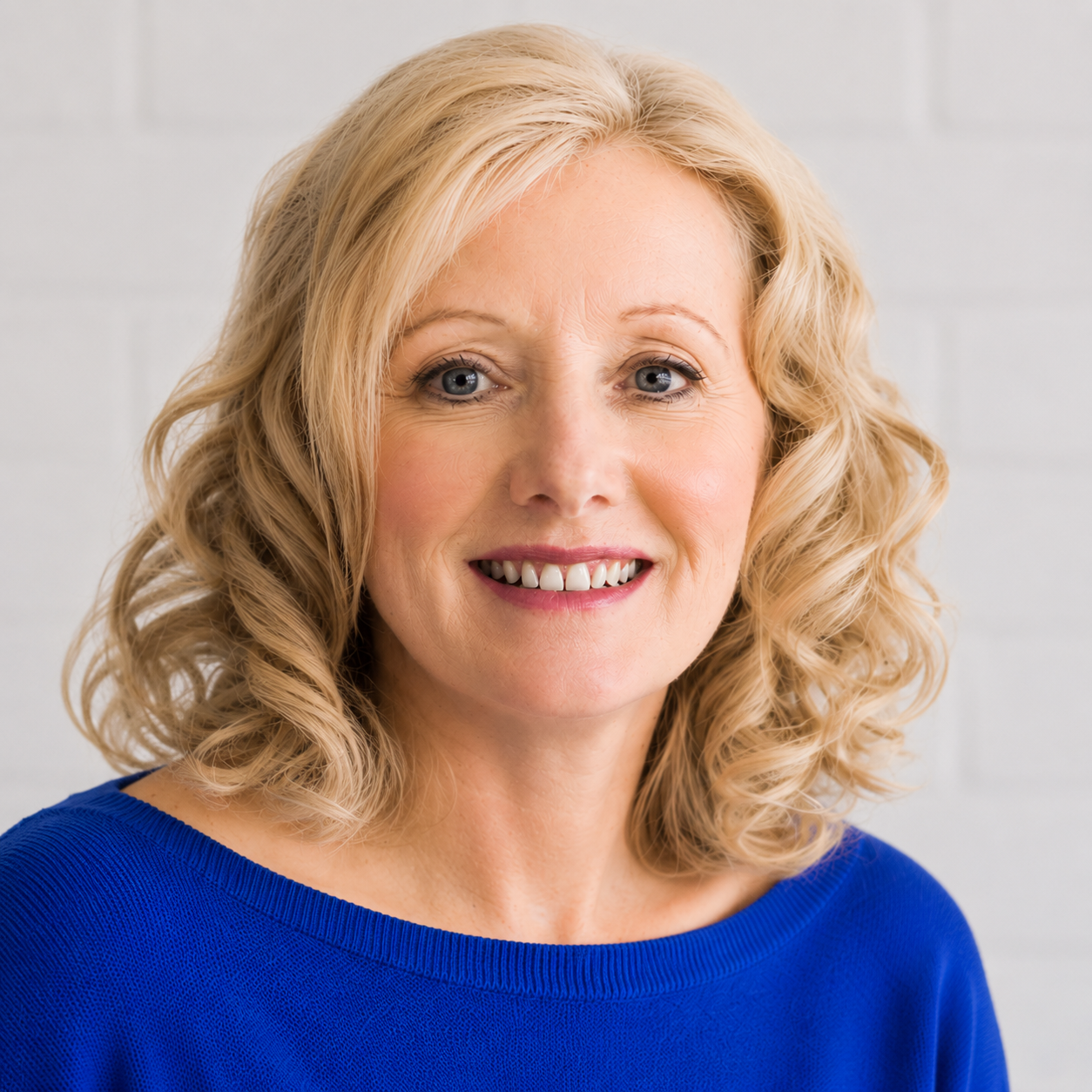
About Linda Fox
Linda is an ICF-ACC credentialled adult ADHD coach (ADHD Life & Business Coach, CALC), with lived experience of ADHD herself. She has been coaching adults with ADHD since 2000, one of the very first specialist ADHD coaches in the UK.
She works with entrepreneurs, legal and medical professionals, and others navigating demanding careers, helping them build practical strategies that fit how their brain actually works rather than fighting against it.
UK-based, supporting clients with ADHD and AuDHD worldwide on Zoom.