Prefer to listen? Your phone or computer can read this page aloud. Here's how
Summer is the thing you looked forward to all year. So why does it feel so unsettling?
Take the first free morning of the holidays. No alarm, no school run, no meeting at nine. You wake up, and it feels like it should be simple. Do one nice thing today. And somehow it is two in the afternoon, you have started four small tasks and finished none of them, and you cannot explain where the morning went.
If your ADHD brain thrives on structure, the summer holiday period can do something counterintuitive. The very freedom you craved becomes the thing that destabilises you. The routine that held you together in June, the school run, the fixed lunch hour, the familiar rhythm of the week, is gone. And without it, time goes strange.
This is not a failing. It is just how ADHD brains work.
Why routine matters more than you think
Routine is not just a preference for adults with ADHD. It is scaffolding. It holds the day in place so your brain does not have to decide everything from scratch.
When the scaffolding disappears, so does the structure that made things manageable. Tasks drift. Sleep shifts. The hours blur together. You might find yourself doing everything and nothing, all at once.
That loose, unmoored feeling is not laziness. It is your brain responding to a genuine change in its environment.
If you are AuDHD, there is an extra layer. Summer often changes the sensory environment too, different noise levels, different light, different textures in what you wear and eat, on top of the routine loss. And the autistic pull toward predictability can sit at odds with the ADHD pull toward novelty, so the same unstructured week can feel both stifling and understimulating at once. Loose anchors help both sides hold on.
The paradox of freedom
Here is the thing about freedom when you have ADHD. Too much of it can be harder to manage than too little.
Unscheduled time sounds wonderful. But without a start point, it is hard to begin anything. Without an end point, it is hard to stop. You end up somewhere in the middle, slightly lost, wondering why you cannot enjoy this like everyone else seems to.
You can enjoy it. You might need a small amount of structure to make the enjoyment feel real.
If you have children at home, you are the routine now
For a lot of us, summer does not just remove our own structure. It hands us someone else’s to hold. When school stops, the children lose their scaffolding too, and you become the thing that holds the day together for everyone in the house.
That means more noise, more demands, and far fewer of the quiet pockets you rely on to think. If you are trying to work from home around them, the interruptions are near constant. You lose your thread, find it, lose it again, and that alone is exhausting. Your own needs slide quietly to the bottom of the list. For a brain that already runs on external structure, that is a genuinely big ask, not a sign you are failing at it.
And if one of your children is neurodivergent too, you are holding two sets of shifting needs at once, often without a break.
Be realistic about what one person can hold. The three anchors below still help, but you might need to make them smaller and let more slide than you would like. That is not lowering your standards. It is matching them to the summer you are actually in.
If you are self-employed, this hits differently
Employed friends get an actual off-switch. You often do not. Client emails still arrive. Invoices still need raising. The work has not gone anywhere, but the scaffolding around it, the shared office rhythm, the commute that bookended the day, colleagues keeping pace beside you, has quietly vanished for the summer.
That mismatch is its own kind of unsettling. You are not on holiday and not properly at work either, and both halves suffer for it. The three anchors below matter even more here, because nothing else is going to impose them for you.
Three anchors that hold the week without killing the holiday feel
These are not a rigid timetable. Think of them as loose pegs in the ground.
- One fixed morning start. Not an alarm at 6am. A simple agreement with yourself: coffee happens here, the day begins around now. It gives your brain a signal that the day has started. It works because your brain does not need the whole day planned, just a reliable signal that it has begun.
- One thing per day that counts as done. Not a to-do list. One thing. A walk, a phone call, a letter written. Something that gives the day a shape. It works because a single finished thing gives your brain proof that the day had shape, which a long unchecked list never quite manages.
- A rough end to the working day. If you are working through the summer, give yourself a time at which you stop. It does not have to be rigid. But having it means you are more likely to actually stop. It works because an unmarked boundary tends to just keep sliding, and having even a loose one gives you permission to actually stop.
You do not have to have it all figured out
If summer feels harder than expected, that is worth knowing. It means you are someone whose brain benefits from structure, and that is useful to know. If you would like to see where your brain leans, what it leans on and what it finds hardest, my free How Your Brain Works snapshot is a good place to start.
It does not mean you are doing holidays wrong.
If you would like to understand that a little better, the snapshot takes a few minutes and shows you where your structure tends to hold and where it slips. A useful thing to know before the next unstructured stretch.
Frequently asked questions
Why does this hit me so much harder than it seems to hit everyone else?
Because your brain relies on external structure more than most. Neurotypical brains can generate their own internal sense of time and priority even when the day is unstructured. ADHD and AuDHD brains lean much more heavily on the environment to do that work. When the environment goes quiet, so does the structure.
Does this mean I need a full timetable for the summer?
No. A full timetable usually collapses within a few days because it fights against the very freedom you wanted from the holiday. The three anchors in this post are deliberately minimal, just enough scaffolding to hold the day without turning it back into term time.
Is this connected to burnout?
It can be. Long stretches without any structure can tip into overwhelm just as easily as long stretches with too much. If you notice exhaustion alongside the unmoored feeling, it is worth checking in with yourself early rather than waiting for September.
How do I know if structure is really my issue?
You usually feel it most when the structure disappears. If unstructured stretches leave you drifting, starting things and not finishing, losing the shape of the day, that is a strong sign your brain leans on external structure more than most. The snapshot is a quick way to see where that shows up for you.
Will it get easier once routine comes back in September?
Usually, yes, though the return itself can be its own adjustment. That is part of why minding the re-entry matters. Easing back in gently tends to work better than switching everything back on all at once.
Considering 1:1 coaching?
If you are seriously thinking about coaching for yourself, a Discovery Session is the next step. Twenty minutes on Zoom to talk about what is going on for you, and whether working together is the right fit.
Get the free guide, and join my weekly newsletter
Sign up and I will send you my free guide, 5 ADHD-Friendly Organisation Hacks (and how to make them stick), straight away. You will also join my weekly newsletter with practical strategies for adults with ADHD and AuDHD. Unsubscribe any time.
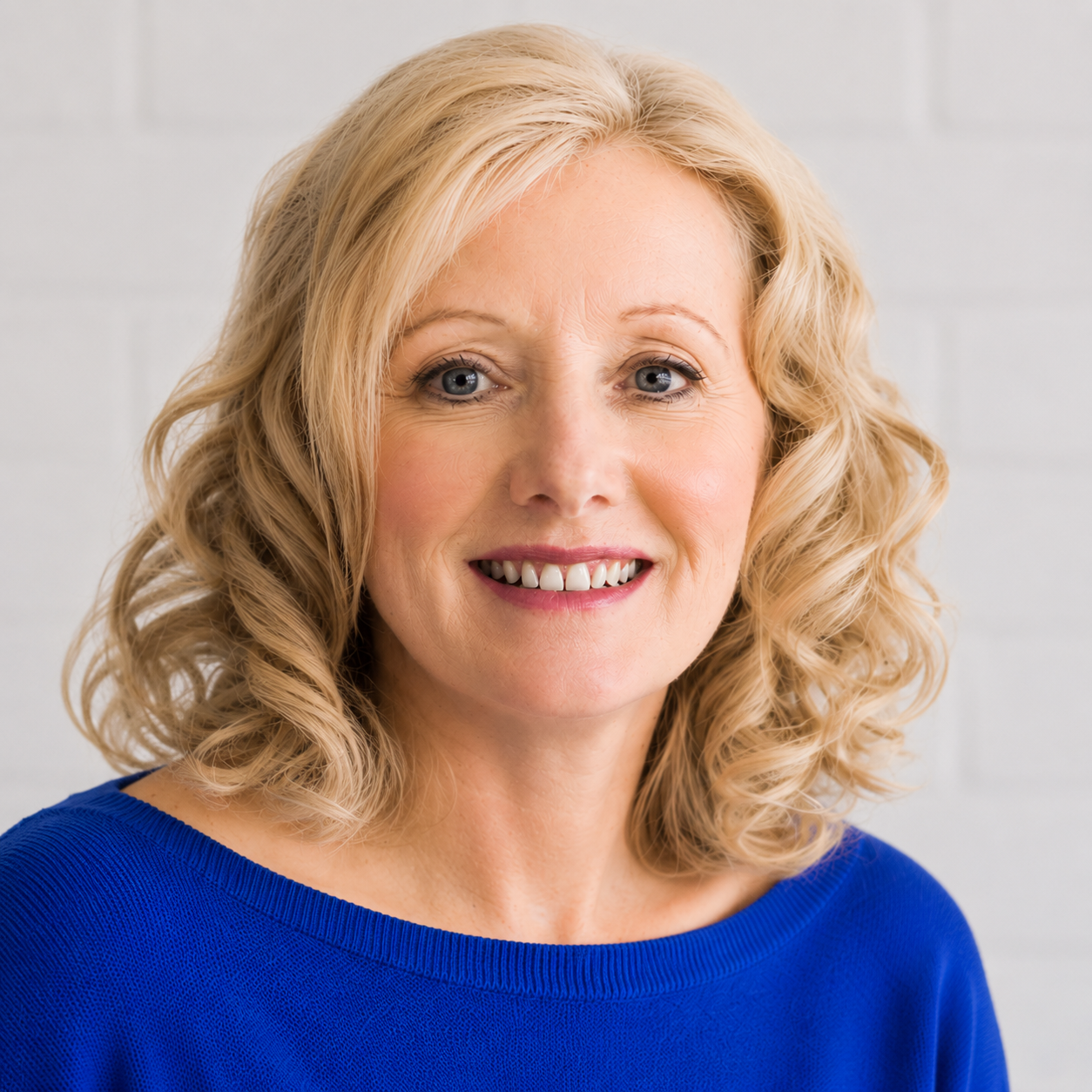
About Linda Fox
Linda is an ICF-ACC credentialled adult ADHD coach (ADHD Life & Business Coach, CALC), with lived experience of ADHD herself. She has been coaching adults with ADHD since 2000, one of the very first specialist ADHD coaches in the UK.
She works with entrepreneurs, legal and medical professionals, and others navigating demanding careers, helping them build practical strategies that fit how their brain actually works rather than fighting against it.
UK-based, supporting clients with ADHD and AuDHD worldwide on Zoom.