Prefer to listen? Your phone or computer can read this page aloud. Here's how
You get home from the day out, close the door, and something in you goes flat. Everyone else seemed to be having a lovely time. You did too, mostly. So why do you feel like you have been wrung out.
If that is familiar, you are not being difficult and you are not doing summer wrong. For a lot of adults with ADHD or AuDHD, socialising costs more than it looks like it should, and the bill often arrives after everyone has gone home.
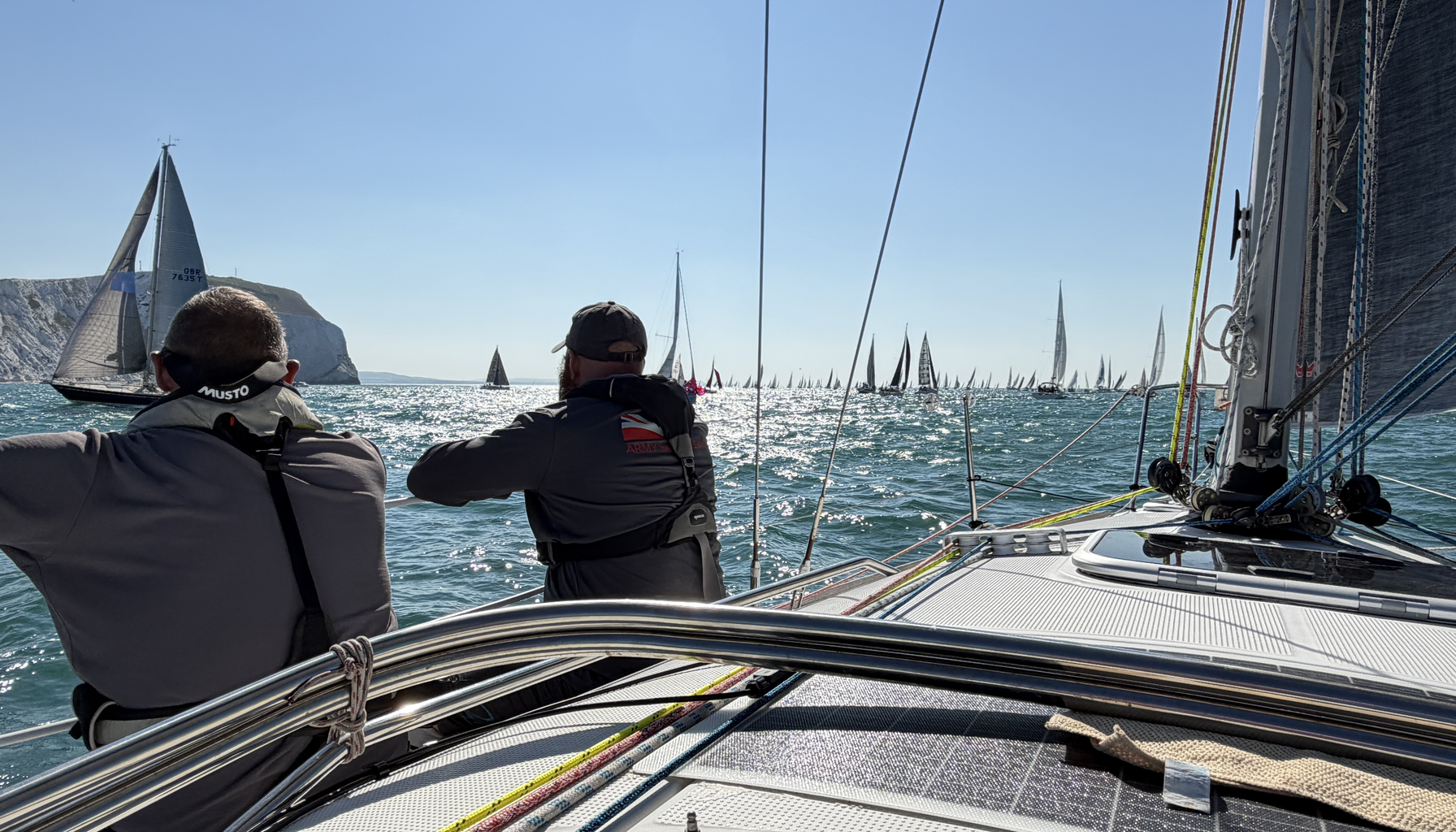
I had my own version of this recently. That is my photograph at the top of this page. We did the Round the Island Race, five of us on the boat for a weekend, over twelve hours on the water in thirty degree heat. A wonderful day with people I like. I came home hardly able to string a sentence together, physically and mentally exhausted.
Why socialising costs an ADHD or AuDHD brain more
A day that looks relaxed is not relaxed for your brain. You are tracking several conversations at once, reading faces, timing when to speak, remembering names, and keeping half an eye on whoever needs you next.
For many people who were diagnosed late, there is another layer running underneath all of it. Masking. Watching yourself, smoothing the edges, managing how you come across so nobody notices the effort. That work is invisible, and it does not switch off just because you are enjoying yourself.
Now add the summer version. Heat, noise, timetables that change by the hour, children who need attention, plans that shift under your feet. Your brain runs at capacity for hours at a stretch. By the evening you may feel more depleted than after a full working day, even though you technically did nothing strenuous.
This is not a social problem. It is an energy problem, and the two are easy to confuse.
The replay that starts when you get home
Here is the part that rarely gets talked about. The event is not over when it is over.
You lie in bed and your brain starts the replay. That thing you said. The joke that did not land. The moment you talked over someone, or went quiet, or gave an answer that came out wrong. You turn it over and over, certain everyone noticed, certain it mattered.
For many of us this is the ache of a sensitive brain reading rejection into things that were probably fine. Dr William Dodson describes how the ADHD brain can feel a small social misstep as something close to physical pain. The replay is that pain looking for evidence, and it will always find some.
It helps to know two things. The replay is a feature of how your brain is wired, not proof that you got it wrong. And the other people there are not running the same tape about you. They went home and forgot the details, because most people do.
The guilt that comes with needing quiet
The hard part is that summer is supposed to be fun. Saying you are tired of socialising in August can feel like ingratitude, or like there is something wrong with you.
There is not. Your brain does more work in a social setting than most people realise, and needing to recover from that is not antisocial. Protecting quiet time is not opting out of your life. It is what makes it possible to show up properly for the parts that matter to you. It helps if the quiet is genuinely quiet, which is harder than it sounds when the phone is within reach.
Plan the recovery, not just the event
Most of us plan the social bit and leave the recovery to chance. Try planning both. These are small moves, and they add up.
- Bookend social events with quiet time. If you have a family lunch on Sunday, keep Saturday evening calm and keep Monday morning clear if you can. Give your brain a runway in and a runway out.
- Leave at your own pace. You do not need to wait for the last person to go. Deciding in advance when you will leave, and doing it without a long explanation, is a complete and reasonable act. “I need to head off” is a sentence, not an apology.
- Negotiate visits in advance. If people are coming to stay, agree upfront how long, and build quiet hours into the visit. A couple of hours reading in another room is not rude. It is how you stay well enough to enjoy the rest.
- Name the replay when it starts. When the tape begins that night, try saying to yourself, this is my brain doing its replay, not new information. You do not have to win the argument with it. You just have to notice it and let it be there without acting on it.
A different relationship with your own energy
None of this means avoiding people. It means understanding what your brain actually spends at these events, and building your summer so the cost does not quietly bankrupt you by August.
Working out what your ADHD or AuDHD brain needs by way of recovery, and what tends to get in the way of you giving it that, is a large part of what working with a coach one to one is for. It is rarely about doing less. It is about spending your energy on purpose, rather than being surprised by the bill.
FAQs
Why does socialising make me so tired when I have ADHD?
A day that looks relaxed is not relaxed for your brain. You are tracking several conversations, reading faces, timing when to speak and remembering names, all at once. If you were diagnosed late there is usually masking running underneath it too. That work is invisible, and it does not switch off just because you are enjoying yourself.
Why do I lie awake replaying what I said at a social event?
Because a sensitive brain goes looking for evidence that something went wrong, and it will always find some. Dr William Dodson describes how an ADHD brain can feel a small social misstep as close to physical pain. The replay is a feature of how you are wired, not proof that you got it wrong.
Is it antisocial to need quiet time after seeing people?
No. Your brain does more work in a social setting than most people realise, and needing to recover from that is not a character problem. Protecting quiet time is not opting out of your life. It is what makes it possible to show up properly for the parts you care about.
How do I recover after a social event with ADHD or AuDHD?
Plan the recovery, not just the event. Keep the evening before and the morning after clear so your brain has a runway in and a runway out. Decide in advance when you will leave, and go without a long explanation. If people are staying, agree the length upfront and build quiet hours into the visit.
Does the replay keep you awake?
Take the free Rejection Sensitivity Check. A few short sections, and you will get your personal results for how strongly your brain reads rejection into things, plus what actually helps.
Considering 1:1 coaching?
If you are seriously thinking about coaching for yourself, a free Discovery session is a relaxed conversation on Zoom about what is going on for you, and whether working together is the right next step.
Book Your Free Discovery Session
Get the free guide, and join my weekly newsletter
Sign up and I will send you my free guide, 5 ADHD-Friendly Organisation Hacks (and how to make them stick), straight away. You will also join my weekly newsletter with practical strategies for adults with ADHD and AuDHD. Unsubscribe any time.

About Linda Fox
Linda is an ICF-ACC credentialled adult ADHD coach (ADHD Life & Business Coach, CALC), with lived experience of ADHD herself. She has been coaching adults with ADHD since 2000, one of the very first specialist ADHD coaches in the UK.
She works with entrepreneurs, legal and medical professionals, and others navigating demanding careers, helping them build practical strategies that fit how their brain actually works rather than fighting against it.
UK-based, supporting clients with ADHD and AuDHD worldwide on Zoom.